LATEST APK
Imagine earning money from something you made months ago. While you sleep, travel, or work on your next idea, someone across the world finds your product, buys it, and downloads it instantly. No shipping, no inventory, no packing boxes. That is the appeal of digital products, and it is why so many creators and entrepreneurs are drawn to them.
The reality is more nuanced. Digital product marketplaces are crowded, and AI has made it easier than ever to produce low-quality products in bulk. Buyers have become more discerning. The products that sell consistently in 2027 solve specific problems for specific people, look professional, and earn trust through reviews and clear presentation.
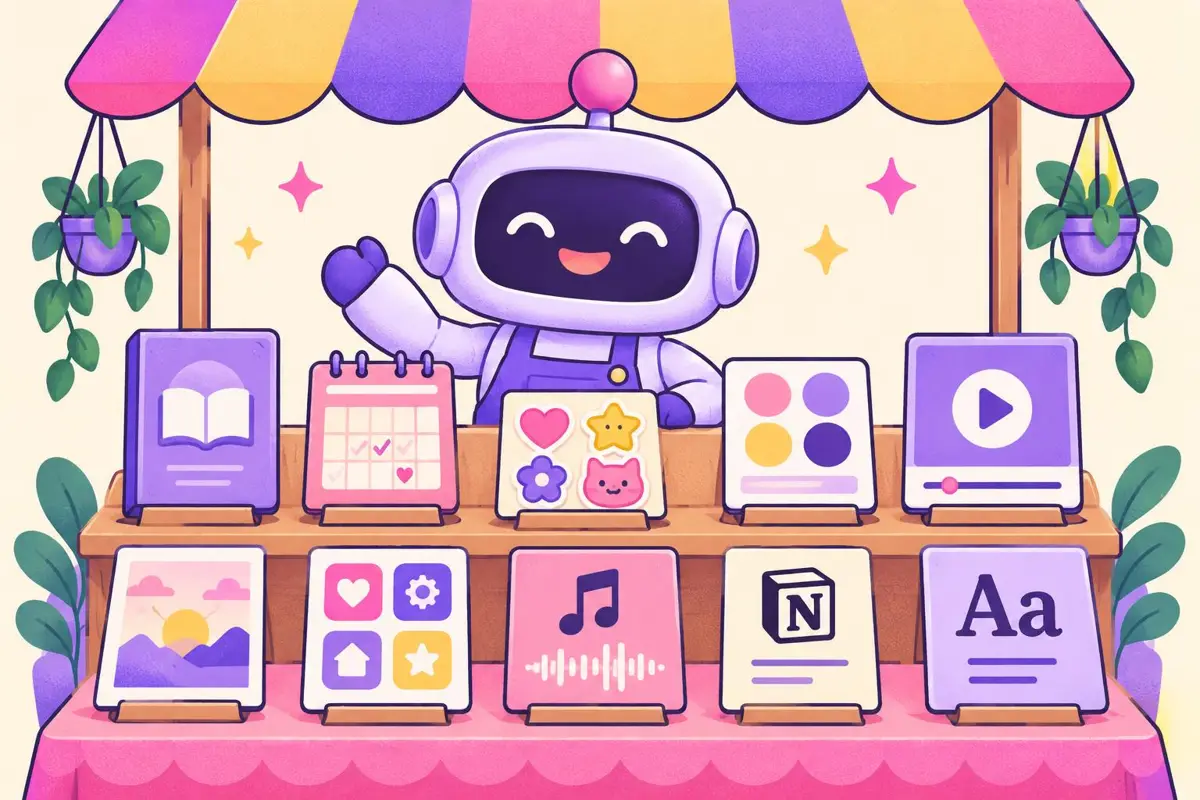
This guide covers ten digital products you can create and sell, who buys each one, how AI can help you make them, what makes a product stand out, and where to sell. We will also walk through detailed composite case studies, a step-by-step launch process, pricing strategies, and the legal and ethical considerations every seller should understand.
Why digital products are worth considering
Digital products have unique advantages compared with services or physical goods.
- Create once, sell many times: after the initial work, each extra sale costs you little.
- Low startup costs: you can often begin with free or inexpensive tools.
- No inventory or shipping: files are delivered instantly and automatically.
- Global reach: anyone with internet access can become a customer.
- Scalability: income is not directly tied to your hours.
But there are trade-offs. Income usually starts slowly. Marketplaces are competitive. You must keep improving products, answering questions, and marketing consistently. Digital products are not truly "passive" in the early stages; they become more passive over time as you build a catalogue and reputation.
How AI changes digital product creation
AI can dramatically speed up the creation process. It can help you research what customers want, brainstorm product ideas, outline content, draft text, generate design variations, write product listings, and create marketing materials.
What AI cannot do is understand your customers better than you, test whether a product truly works, or build the trust that leads to repeat buyers. The most successful sellers use AI to handle repetitive production while investing their own time in research, quality, and customer relationships.
1. Ebooks and practical guides
Ebooks remain one of the most accessible digital products. The best-selling ones are practical, focused, and solve a specific problem, such as preparing for a particular exam, starting a small vegetable garden, or managing money as a new freelancer.
Who buys them: people who want focused knowledge quickly, often as a cheaper alternative to a course.
How AI helps: outlining chapters, researching subtopics, drafting sections that you then rewrite, suggesting examples, and checking clarity.
What makes one stand out: genuine expertise, real examples, a clear promise, and clean design. Readers instantly notice generic, padded content.
2. Planners and organisers
Digital and printable planners help people organise their time, money, health, and goals. They are extremely popular, especially when designed for specific audiences.
Who buys them: students, parents, freelancers, small business owners, and anyone trying to get organised.
How AI helps: brainstorming sections, suggesting layouts, drafting prompts and instructions, and creating variations for different audiences.
What makes one stand out: specificity. A "budget planner for new freelancers with irregular income" is far more compelling than another generic budget planner.
3. Sticker packs and digital stickers
Digital stickers are used in digital planning apps, journals, and messaging. Many buyers collect themed packs.
Who buys them: digital planners, journaling enthusiasts, and students.
How AI helps: generating concept variations and colour ideas, though many successful sellers draw or refine stickers by hand for a distinctive style.
What makes one stand out: a recognisable style and cohesive themes, such as seasonal packs or packs for particular hobbies.
4. Colour palettes, presets, and filters
Photographers, designers, and content creators buy presets and filters to achieve consistent looks quickly. Colour palettes help designers and brands create cohesive visuals.
Who buys them: content creators, photographers, small brands, and hobbyist designers.
How AI helps: analysing colour harmony, generating palette ideas, and helping you write clear usage instructions.
What makes one stand out: clear before-and-after previews and versatility across different lighting or content types.
5. Mini courses and video lessons
Short, focused courses teach a specific skill in an hour or two. They are often easier to complete and sell than long, comprehensive courses.
Who buys them: learners who want quick, practical skills, such as editing a video on a phone or setting up a basic online shop.
How AI helps: structuring lessons, writing scripts, creating quizzes and worksheets, and generating slides.
What makes one stand out: clear outcomes, practical exercises, and an instructor who clearly knows the subject.
6. Printables
Printables include wall art, worksheets, checklists, party decorations, flashcards, and educational materials. They are especially popular with parents, teachers, and event planners.
Who buys them: parents, teachers, event hosts, and home decorators.
How AI helps: generating ideas, drafting educational content, and creating design variations.
What makes one stand out: professional design, tested usefulness, and accurate content, especially for educational materials.
7. Icon sets and design assets
Designers, developers, and content creators need icons, illustrations, patterns, and graphic elements. Consistent, high-quality sets are valuable time savers.
Who buys them: web designers, app developers, presentation makers, and content creators.
How AI helps: exploring concepts and styles, though professional asset sets usually require careful manual refinement for consistency and clean files.
What makes one stand out: consistency, file quality, multiple formats, and clear licensing.
8. Music loops and sound effects
Video creators, game developers, and podcasters need background music and sound effects. Royalty-free audio packs are a steady niche.
Who buys them: video creators, indie game developers, podcasters, and advertisers.
How AI helps: AI music tools can help explore ideas, but check carefully whether their terms allow commercial resale. Many successful sellers use AI only for inspiration or assistance while composing original work.
What makes one stand out: quality, clear licensing, and themed collections for specific uses.
9. Notion and productivity templates
Templates for tools like Notion, spreadsheets, and project management apps help people organise their work and lives. Well-designed templates save buyers hours of setup.
Who buys them: freelancers, students, small teams, and productivity enthusiasts.
How AI helps: designing database structures, writing formulas, drafting instructions, and creating sample content.
What makes one stand out: solving one workflow extremely well, clear setup instructions, and attractive design.
10. Fonts and lettering packs
Hand-lettering artists and type designers can sell fonts, lettering assets, and alphabet packs. This requires real design skill but can be highly rewarding.
Who buys them: designers, crafters, small brands, and content creators.
How AI helps: brainstorming styles and assisting with marketing, but font design itself remains highly specialised craft work.
What makes one stand out: originality, complete character sets, and professional file quality.
Twelve specific product ideas to spark your thinking
Generic ideas are crowded; specific ideas sell. Here are examples of the level of specificity that tends to work. Use them as inspiration, not instructions.
- A meal planner for families managing a child's food allergy.
- A wedding budget tracker for couples planning on a small budget.
- Printable maths games for parents of six-year-olds.
- A Notion client tracker for freelance video editors.
- A social media template pack for independent bookshops.
- An ebook guide to the first ninety days of running a home bakery.
- A presentation template set for university group projects.
- A colour preset pack for food photographers shooting in natural light.
- A revision workbook for one specific professional certification.
- A printable routine chart set for toddlers and preschoolers.
- A spreadsheet tracker for landlords managing a few rental properties.
- An icon set for mental health and wellbeing apps.
Each one names a clear audience and a clear problem. That clarity makes them easier to create, easier to market, and easier for the right buyer to say yes to.
Choosing the right product for you
With ten options, how do you choose? Consider three factors.
- Your skills: writers might choose ebooks or courses; designers might choose printables, icons, or stickers; organised thinkers might choose templates and planners.
- Your knowledge: your profession, hobbies, and experiences reveal audiences you understand deeply.
- Market demand: research what people already buy, and look for underserved segments rather than avoiding competition entirely.
The sweet spot is a product that uses your skills, draws on your knowledge, and serves an audience that is actively looking for solutions.
Finding a problem worth solving
The most important step happens before you create anything. Successful products solve real problems. Here are reliable ways to find them.
- Listen to communities: forums, social media groups, and comment sections are full of people describing their frustrations.
- Study marketplace reviews: read reviews of existing products, especially complaints. Each complaint is an opportunity to make something better.
- Ask directly: talk to people in your target audience about what they struggle with.
- Notice your own frustrations: problems you have solved for yourself often matter to others.
AI can help you summarise patterns from your research, but read the original discussions yourself. The exact words people use will guide your product and your marketing.
Composite case study: the planner that found its niche
Hana, a composite example, worked as a freelance translator. Her income was irregular, and she struggled to budget. Existing budget planners assumed a steady monthly salary.
Research: she found many freelancers in online communities describing the same problem: how do you budget when income changes every month? She saved dozens of comments and noted repeated phrases like "feast or famine" and "saving for slow months".
Creation: she used AI to help outline a planner system based on average income, a buffer fund, and monthly "pay yourself" amounts. She designed the planner herself, added clear instructions, and tested it for three months with her own finances and two freelancer friends.
Launch: she listed the planner on a digital marketplace and her own simple website, with preview images showing real examples and a short video explaining the method.
Growth: early sales were modest. Buyer feedback asked for a spreadsheet version, so she added one. She then created related products: an invoice tracker and a tax savings planner for freelancers. Together, the products formed a small, coherent catalogue.
The lesson: Hana did not compete with generic planners. She solved a specific problem she personally understood, tested it properly, and expanded based on customer feedback.
Composite case study: the teacher's printable shop
Our second composite example is Marcus, a secondary school science teacher who noticed that free revision resources were often inaccurate or poorly designed.
He created a set of printable revision sheets for one exam topic, using AI to help draft summaries and practice questions, then checked every fact against the official curriculum and his own expertise. He designed clean, consistent layouts and included answer keys.
His first product sold slowly, but reviews praised its accuracy. He added more topics, then bundled them into a complete revision pack at a discounted bundle price. Bundles became his best-selling products. Before exam seasons, sales increased significantly, so he planned new releases months ahead.
The lesson: accuracy and trust were Marcus's competitive advantage. In a marketplace full of hastily generated content, an expert who carefully checks every detail stands out.
How to create your product step by step
Here is a reliable process for any digital product.
- Define the audience and problem: write one sentence, such as "This planner helps new freelancers budget irregular income."
- Outline the solution: use AI to brainstorm structures, then choose and refine the best one yourself.
- Create a first version: build a simple but usable version.
- Test with real users: give it to three to five people in your audience and watch how they use it.
- Improve: fix confusion, add missing elements, and polish the design.
- Prepare files: export in the right formats, include instructions, and check every page.
- Create previews: show the product in use with clear, attractive images or videos.
- Write the listing: explain the problem, the solution, what is included, and who it is for.
Where to sell digital products
Different platforms suit different products and sellers.
- Etsy: popular for printables, planners, and creative digital products, with built-in search traffic but strong competition and marketplace fees.
- Gumroad and similar platforms: simple creator storefronts, useful for ebooks, templates, and courses, especially if you bring your own audience.
- Your own website: more control, branding, and customer relationships, but you must bring traffic yourself.
- Specialised marketplaces: platforms for design assets, templates, fonts, audio, or courses can reach targeted buyers.
Many sellers start on one marketplace to benefit from existing traffic, then build their own website and email list over time to reduce dependence on a single platform.
Always read each platform's current rules, especially regarding AI-generated content, intellectual property, and fees. Policies change, and violations can lead to suspended shops.
Pricing digital products
Pricing depends on the value of the problem you solve, the depth of the product, and what your audience is used to paying. Some practical strategies:
- Research comparable products: understand typical price ranges, then position yourself based on quality and specificity.
- Use bundles: combine related products at a discount to increase average order value.
- Offer tiers: a basic version and a premium version with extras.
- Avoid racing to the bottom: extremely low prices attract bargain hunters and make it hard to sustain a business.
- Test and adjust: prices are not permanent. Experiment carefully and observe the results.
Marketing your products
Even the best product needs visibility. Effective marketing for digital products often includes:
- Search optimisation: use the words your customers actually search for in titles and descriptions.
- Social media content: show the product in use, share tips related to the problem it solves, and tell the story behind it.
- Email lists: offer a free sample or helpful resource in exchange for email addresses, then share new products and useful content.
- Collaborations: partner with creators who serve the same audience.
- Reviews: encourage satisfied customers to leave reviews, and respond professionally to feedback.
Anatomy of a listing that sells
Your product listing does the job of a salesperson in a shop. It has seconds to convince a browsing customer to stay and minutes to convince them to buy. Strong listings share a common structure.
The title clearly states what the product is and who it is for, using words people actually search. "Freelancer budget planner for irregular income, printable and spreadsheet" beats "Ultimate money planner".
The first preview image shows the product in use, not just a flat file. A planner open on a desk with a pen and coffee, or a template displayed on a laptop screen, helps buyers imagine owning it.
Additional previews show what is inside: key pages, features, and examples. A final image listing everything included reduces confusion and refund requests.
The opening lines of the description describe the problem and the outcome. For example: "Budgeting is hard when your income changes every month. This planner helps you smooth out the feast-and-famine cycle with a simple three-step system."
A clear list of contents explains exactly what buyers receive: number of pages, formats, sizes, and any bonuses.
Instructions and requirements explain how to use the product and what software is needed, such as "Requires a free Notion account".
Licensing and policies state whether the product is for personal or commercial use and how refunds or support work.
AI can help you draft each section, but always edit the result so it sounds natural and specific. Generic AI-written descriptions tend to blur together, and buyers skim past them.
Your launch week plan
Launching a product without a plan often means quietly listing it and hoping. A simple launch week gives your product its best chance.
- Day one: publish the listing, then check every link, file, and preview on both mobile and desktop.
- Day two: share the story behind the product on social media, explaining the problem you noticed and how you solved it.
- Day three: send an email to your list, if you have one, with a short launch discount or bonus.
- Day four: post helpful content related to the problem, such as tips, with a gentle mention of the product.
- Day five: reach out personally to people who tested the product and ask whether they would be willing to leave an honest review.
- Day six: share a short video demonstration showing the product in use.
- Day seven: review what happened: views, clicks, sales, and questions. Note what to improve.
Not every launch will produce many sales, and that is normal. The real goal of a launch is to learn quickly and start building momentum.
Turning one product into a catalogue
The most stable digital product businesses rarely depend on a single product. They build catalogues of related products for the same audience. This has several benefits: customers who like one product often buy another, bundles increase order values, and each new product is easier to market to existing customers.
Here is how to expand thoughtfully. First, listen to customer questions and reviews; they often reveal the next product. Second, create complementary products that solve adjacent problems for the same audience, such as an invoice tracker alongside a budget planner. Third, reuse your design system so products look like a family. Fourth, create bundles once you have three or more related products. Fifth, update older products when you learn something new, and let previous buyers know.
Avoid the temptation to expand sideways into unrelated audiences too early. A catalogue for one audience builds reputation and repeat customers. Scattered products for many audiences dilute both.
Customer support: the overlooked growth engine
Digital products still need customer service. Buyers may have trouble downloading files, using templates, or understanding instructions. How you respond shapes your reviews and reputation.
Respond quickly and kindly, even to frustrated messages. Create a simple frequently asked questions page or document covering common issues. When the same question appears repeatedly, improve the product or instructions so it stops happening. Consider including a short welcome guide or video with every purchase.
AI can help draft friendly, clear replies and organise common questions, but always personalise responses. A thoughtful reply to a confused customer often turns them into a loyal one who leaves a glowing review.
Legal and ethical considerations
Selling digital products responsibly protects your business and your customers.
- Commercial rights: check that you have the right to sell anything created with AI tools, fonts, images, or templates.
- Platform policies: follow each marketplace's rules about AI-generated content and disclosure.
- Originality: do not copy other sellers' products or imitate living artists' distinctive styles.
- Accuracy: educational, health, financial, and legal content must be accurate and include appropriate disclaimers.
- Licences: clearly explain how buyers may use your product, such as personal or commercial use.
- Taxes: understand tax obligations for digital sales in your location and your customers' locations.
Where AI fits in each stage of production
To make the role of AI concrete, here is how a careful seller might use it at each stage, and where human work remains essential.
Research. AI can summarise patterns across many forum posts, reviews, and comments that you collect, and suggest possible product angles. Human work: reading original discussions, talking to real people, and deciding which problem is worth solving.
Planning. AI can propose outlines, structures, and feature lists. Human work: choosing what to include based on real needs, and removing anything that adds bulk without value.
Creation. AI can draft text, generate design variations, suggest formulas for templates, and produce quiz questions or exercises. Human work: rewriting in your voice, designing consistent layouts, checking accuracy, and adding the expertise that makes the product trustworthy.
Testing. AI can help you create a checklist of things to test and review instructions for clarity. Human work: actually using the product, watching real users try it, and fixing what confuses them.
Marketing. AI can draft listing descriptions, social captions, email sequences, and video scripts. Human work: telling your genuine story, showing the product honestly, and building relationships with your audience.
Support. AI can draft replies and organise common questions. Human work: empathy, judgement about refunds or special cases, and turning feedback into improvements.
Across every stage, the pattern is the same. AI accelerates the routine parts, and you provide the insight, quality, and trust that make customers choose your product over thousands of alternatives.
Measuring what matters
Once your product is live, a few simple numbers tell you what to improve. Views show whether people are finding your listing; if views are low, improve titles, keywords, and marketing. Click-through or visit rates show whether your thumbnail and title attract interest. Conversion rate, the share of visitors who buy, shows whether your previews and description persuade. Reviews and questions reveal how satisfied buyers are and what confuses them. Repeat purchases show whether you are building a loyal audience.
Change one thing at a time, such as the main preview image or the title, and observe the effect over a few weeks. Small, deliberate improvements add up to significant growth.
Common mistakes to avoid
- Making products nobody asked for. Research before you create.
- Mass-producing low-quality AI products. They rarely sell and can damage your reputation.
- Skipping testing. Broken links, errors, and confusing instructions lead to refunds and poor reviews.
- Weak previews. Buyers cannot touch digital products; previews must show exactly what they get.
- Ignoring customer feedback. Reviews and questions are a free roadmap for improvement.
- Expecting instant passive income. Most successful catalogues are built over many months.
Frequently asked questions
Can I sell products made with AI? Often yes, but it depends on the tool's terms and the platform's rules. Check both, and add meaningful human work to make your products genuinely valuable.
How many products should I create? Start with one excellent product. Expand into related products once you have feedback and early sales.
How long before I make sales? It varies widely. Some products sell within days; many take weeks or months of marketing and optimisation.
Do I need an audience first? Not necessarily, especially on marketplaces with built-in search traffic. However, an audience makes launching new products much easier over time.
Key takeaways
Digital products can become a rewarding income stream, but success comes from solving specific problems, not from producing as much as possible. Use AI to speed up research, creation, and marketing, but invest your own expertise in quality, testing, and trust. Start with one excellent product for a specific audience, listen carefully to customers, and build a catalogue that grows stronger with every release.
This article is educational and does not guarantee income. Names and stories are composite examples based on common patterns.
Back to the blog